Mullet Festival 2026 In Florianópolis
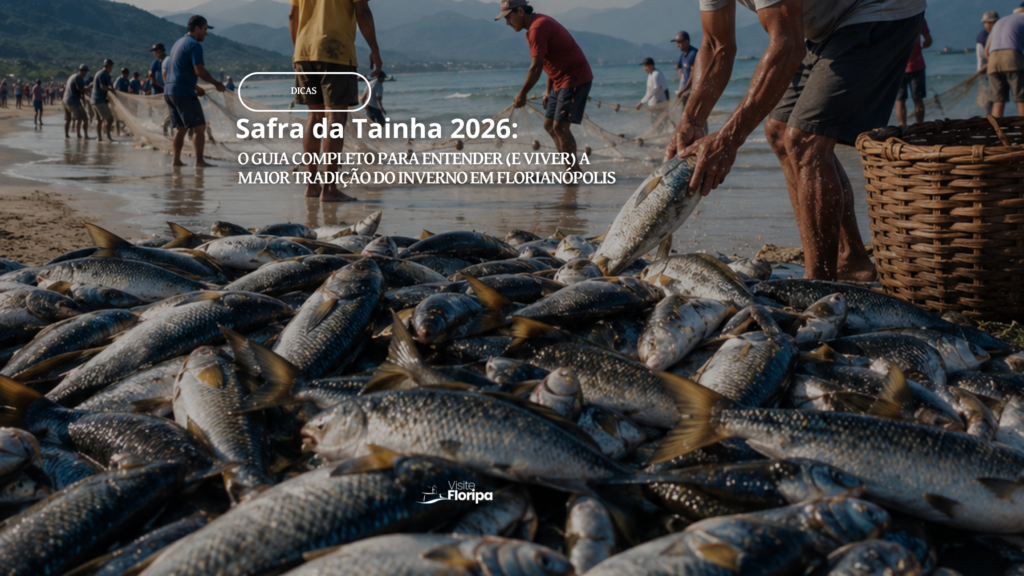
If you are in Florianópolis between May and July and notice a different activity on the beaches — nets being laid out on the sand, groups of fishermen keeping an eye on the horizon, the smell of grilled fish wafting in from afar — know that you are witnessing something very special. It is the Mullet Catch, one of the most genuine and beautiful cultural traditions of Floripa, and which happens here on the island every year with an energy that goes far beyond simply fishing.
You may have heard about it, but you might not fully understand what’s going on yet. Perhaps you’ve recently arrived in Floripa, or you’re planning a visit during this time. Whatever the case, this text is for you. Let’s start from the beginning.
The Mullet Season
MulletFlathead grey mullet) is a fish that lives in the South Atlantic and has a very specific behavior: every year, in autumn and winter, large schools migrate from southern Brazil towards the north, passing precisely along the coast of Santa Catarina. It is during this passage that the season occurs—the period when fishing is authorized and communities mobilize to catch the fish.
The official season runs from May 1st to July 31st, with the peak of the schooling fish generally between May and June. This is when the sea cools down, the south wind picks up, and the winter sky begins to show itself. For those who have lived on the island for some time, this season has its own special flavor: it's Floripa's winter in its most authentic form.
In 2026, the harvest officially began on May 1st, and in the first few hours of the day, the ranches scattered along the city's beaches were already bustling – nets being prepared, spotters standing on the rocks or out at sea, and that collective energy that's difficult to describe without having seen it live.
Why is this so important here?
Florianópolis is not just a city of beautiful beaches. It carries a very strong cultural identity, shaped by the Azorean settlers who arrived on the island in the 18th century and brought with them their customs, religiosity, gastronomy, and, of course, their deep connection to the sea. Mullet fishing is one of the greatest legacies of these people.
It's no coincidence that artisanal mullet fishing is Intangible Cultural Heritage of Santa Catarina — title won in 2019. And Florianópolis, which was recognized by UNESCO as the first Creative City of Gastronomy From Brazil, the mullet is one of the pillars of this culinary identity.
When you eat mullet roasted over coals or try mullet roe — a very rare delicacy that only appears this time of year — you are participating in something that spans generations. This is no exaggeration. It is living history.
The fishing ranch: the heart of the harvest
Before we talk about how fishing works, you need to know about the ranch. Because the ranch is everything.
You fishing ranches they are simple structures, usually made of wood, installed on the beach. Each shack belongs to a group of fishermen — sometimes an entire family, sometimes a community — and serves as the base of operations for the season. It's where the nets are stored, where the fishermen gather to plan, and where the fish are weighed and divided after each haul.
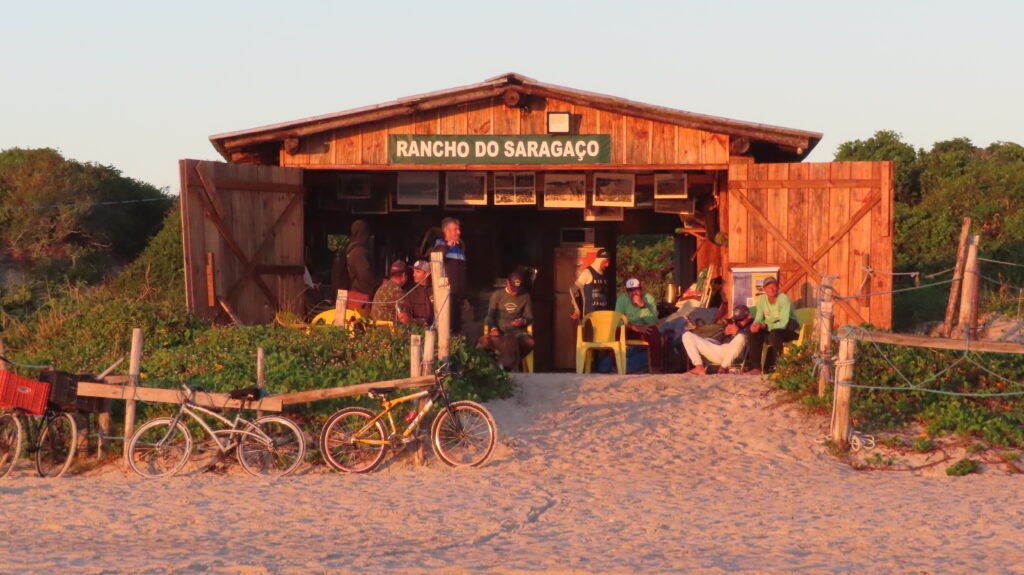
But the ranches are much more than a place to store nets. They are vibrant community centers. It's at the ranch that stories are told, where children learn from their parents, where neighbors show up to lend a hand, and where, after a good day's work, that celebration happens, mixing exhaustion, joy, and gratitude.
In Florianópolis, there are many *ranchos* scattered along the city's beaches. Each one has its own personality, its own history, its own characters. One of the most famous is the Saragasso Ranch, in Barra da Lagoa, which has become a cultural landmark of the harvest and receives visitors throughout the season.
How artisanal fishing works: beach seining
The most traditional and most beautiful way to watch is the so-called beach buggy, or simply “the cast.” It is a form of fishing that originates from the Azores, has been passed down through generations, and still happens today exactly as it was taught centuries ago.
It works like this: the ranch team positions a scout — generally the most experienced fisherman in the group, someone with decades of sea in their eyes. This guy stays in an elevated spot, like a rock, a rocky outcrop, or even a boat, observing the sea surface. He knows how to read the water's movement, the sea's color, the birds' behavior. When the school of fish appears, he gives the signal.
Then the spectacle begins.
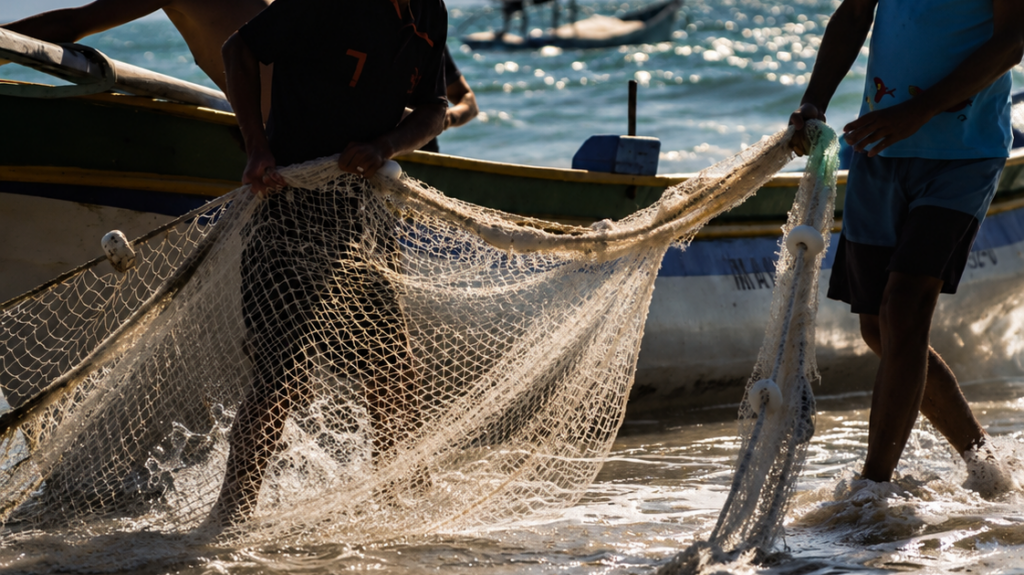
A canoe leaves the ranch carrying the net. The net is cast around the school of fish, forming a large circular enclosure. After the net closes, the pulling begins— and this is where everyone can participate.
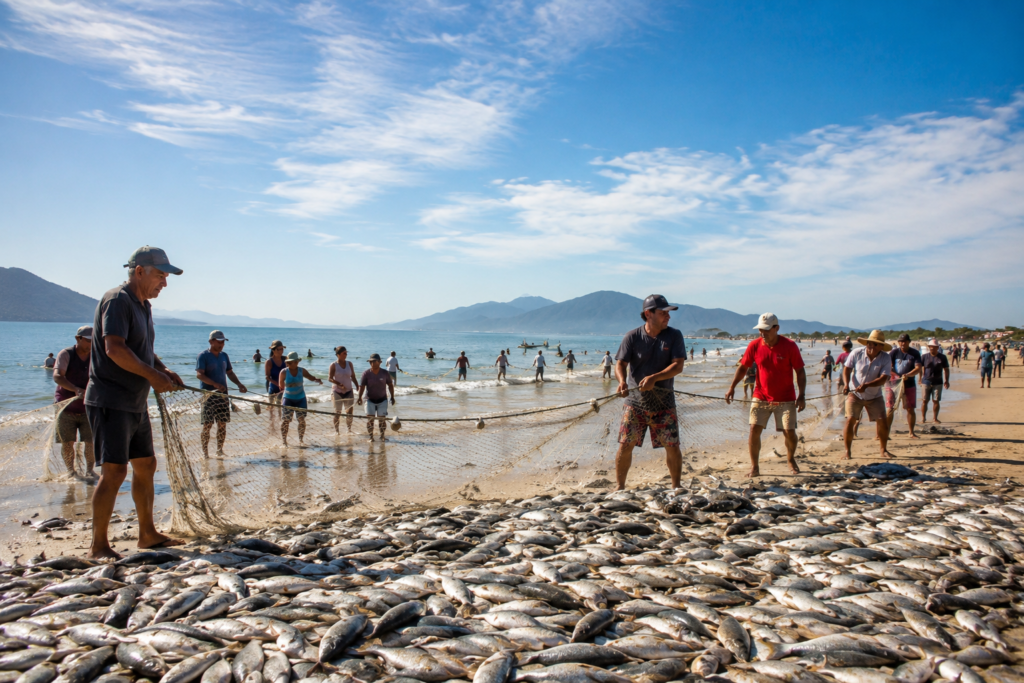
The pull (the “haul”) is collective. The fishermen call residents, tourists, anyone passing by on the beach. You pull on one side, I pull on the other, that little old lady over there pulls too. It's a job of strength and synchronicity, good shouting, that knot in your stomach as the net gets closer to the sand and you start to see the silvery reflection of the mullets underwater.
When the net closes and the sea returns the fish to the sand, an emotion hits that's hard to explain. Shouts, applause, sometimes even tears. It's a moment of pure community.
After the haul, comes the sharing. Part of the catch is sold to cover the ranch's expenses. The rest is divided among the fishermen and those who helped. Yes—if you helped pull the net, you might get a mullet as a gift. That is the generosity that defines this culture.
The other fishing methods
Besides beach seines, there are other ways to catch mullet during the season. It's worth understanding the difference:
Ringed enamel Licensed boats that cast gillnets at sea. In 2025, Florianópolis had 51 licensed vessels in this modality, involving between 500 and 600 fishermen. It is still artisanal fishing, but done on boats at sea, different from collective beach seining.
Surface coastal email: similar to the ring-net, but can be operated by vessels from other regions of the South and Southeast of Brazil.
Trawler larger networks, used on an industrial scale. This modality has a very different impact and is regulated separately.
The most important difference to understand is between artisanal fishing — including beach seines and netting with smaller vessels — and the Industrial fishing, which happens on the high seas with large trawlers, based in hubs like Itajaí and Navegantes. Industrial fishing is on a much larger scale, but it is artisanal fishing that carries the culture, identity, and way of life of the island's communities.
For many fishing families in Florianópolis, the fishing season is the most important time of the year economically. In 2025, ring-net fishing in Floripa alone produced nearly 400 tons of mullet, with an estimated economic impact of R$4 million. And that’s not counting beach trawling, which mobilized more than 1,000 people across the city’s fishing villages.
The Mullet Route: Where to See and Participate
Florianópolis has a Tainha Route official, with 26 beaches recognized for artisanal fishing. They are:
Armação do Sul Swamp, Barra da Lagoa, Caieira of Barra do Sul, Caiacanga, Campeche, Canasvieiras, Cachoeira do Bom Jesus, Daniela Beach, Forte Beach, Galheta, Gravatá, Ingleses, Joaquina, Jurerê, International Jurerê, Lagoinha do Norte, Moçambique, Morro das Pedras, Naufragados, Sul Swamp, Ponta das Canas, Brava Beach, Prainha da Barra da Lagoa, Ribeirão da Ilha, Santinho, and Tapera.
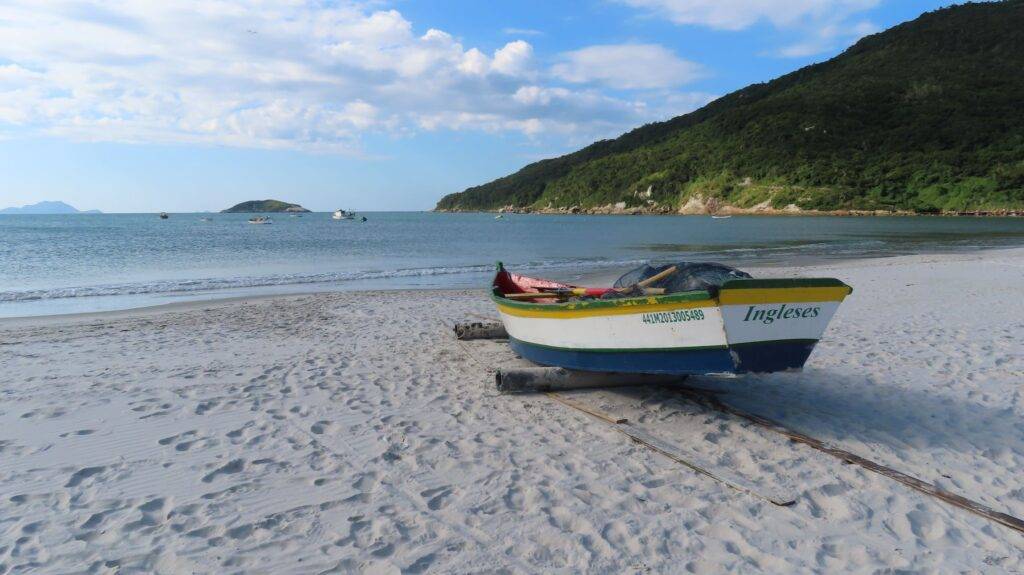
The beaches with the strongest history in the season—and where the chance of seeing a cast is greater—are the Campeche, the Southern Swamp, The Barra da Lagoa, the Mozambique, the English and the Little Saint. If you want to live the experience, these are the right bets.
An important notice: during the season, some beaches have Water sports restrictions, including surfing. The measure exists to guarantee the safety of fishermen during their operations. It's not meant to bother anyone—it's meant to protect those working at sea. Respecting this rule is respecting tradition.
Curiosities that most people don't know
The largest bid in the history of Santa Catarina It happened in 1984, at Praia dos Ingleses, here in Florianópolis. 120,000 mullet were caught in a single haul — something between 180 and 300 tons of fish. It's a story that still circulates among the older fishermen with that mix of pride and nostalgia.
The scout is the most respected figure on the ranch. He has accumulated decades of knowledge about the sea — the currents, the tides, the wind, the water's coloration — and carries patterns in his memory that no app can replicate. When the spotter says, “There's a school,” everyone runs. It's an ancestral science.
The mullet became the Intangible Cultural Heritage of the State of Santa Catarina in 2019, but it has already been recognized as Municipal Cultural Heritage of Florianópolis since 2012. The state title came after years of mobilization by fishing communities.
The harvest mass It is a religious tradition that marks the opening of the season. In 2026, the celebrations began on April 26th with a mass at Campeche Beach, broadcast throughout the state, connecting the fishing communities of Santa Catarina in prayer before the official start.
Mullet roe They are the most sought-after delicacy of the season. They only appear at this time, when the females are laden. Outside the season, they simply don't exist. Whoever tries them once eagerly awaits the following winter.
May 1st is the State Mullet Harvest Opening Day. The data was officially established recently precisely to value artisanal fishing and the cultural traditions linked to it.
The gastronomy of mullet: how to eat well during this season
If there's one thing the season does well, it's fill the city's restaurants and backyards with the unmistakable aroma of grilled mullet. This is the most traditional way to prepare it — the whole fish, seasoned with coarse salt, slowly roasted on the grill. The meat is firm, with a slightly sweet flavor, and when cooked well, it's juicy on the inside and crispy on the outside.
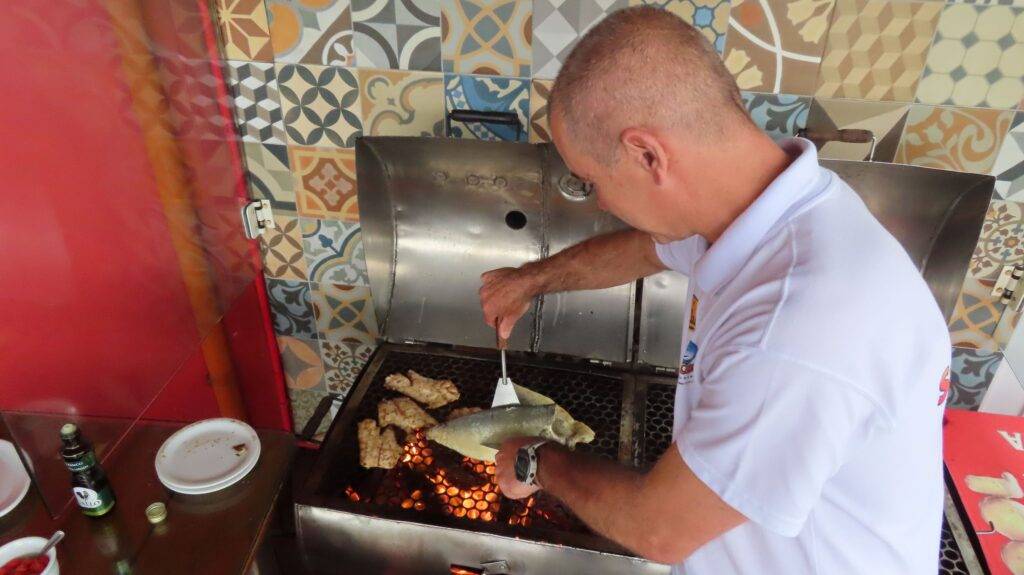
Other classic ways to eat mullet in Floripa:
- Stuffed mullet with roe: The most special version. The fish roe itself doubles as filling. A rare occasion dish.
- Oven-baked mullet with garlic and lemon: more homemade, easy to make.
- Smoked mullet found in some fish markets on the island, with a more intense flavor.
The neighborhoods with the most options for fresh mullet to eat at this time are Ribeirão da Ilha, the Southern Swamp and the Barra da Lagoa — areas with a strong fishing community, where restaurants have direct access to freshly caught fish.
How the harvest organizes the city
The harvest has clear rules — and one of them directly affects those who visit the beaches during this period: Surfing and other water sports are prohibited in specific sections of various beaches in Floripa during the harvest season.. The municipal law exists to protect fishermen working at sea, as nets are left in the water and a float in the middle of the fishing ground can be dangerous for everyone.
So, if you surf, kitesurf, or participate in any water sport, it's worth checking the situation at your chosen beach before you go. It's not to create conflict – it's to ensure that fishing happens safely. And honestly, when you see a haul up close, you'll want to drop your board and go pull the net along.
Another important thing: fishing also has its own quota and season rules, defined by the federal government, precisely to ensure that the mullet continues to appear every year. Artisanal fishermen, who have lived off the sea for generations, are generally the biggest defenders of this sustainability — because they know better than anyone that respecting nature's cycle is what guarantees the next harvest.
How can you participate
The harvest is one of the few popular traditions in Florianópolis where anyone can actively participate. You don't need to be a fisherman, you don't need to know anyone, you don't need to pay anything. You can:
- Go to a ranch and observe — most are open to the public during the season. Arrive early, especially at low tide, when activity is usually highest.
- Help pull the net — If a cast is happening and the fishermen call, put your hand in the net. It's an experience you won't forget.
- Participate in cultural events — The harvest opening in Floripa has a cultural program: performances, debates, awards, boi-de-mamão (a traditional folk performance), and a talk circle. In 2026, the opening events will take place in Campeche and Moçambique.
- Eat well — Go to a fishing village restaurant and order the mullet. It's that simple.
- Talk with the fishermen — they love to tell the story. Ask about the scout, about the biggest bid they've ever seen, about how they learned. You'll come away with better stories than any museum could give you.
Before you go: what to know
- Period: May 1 - July 31 (main modalities).
- Best beaches to see: Campeche, Southern Swamp, Barra da Lagoa, Mozambique, English, Little Saint.
- Water sports restrictions: During the season, some beaches prohibit the activity in specific sections. Check before you go!
- Best time: From dawn until early morning, when schools of fish usually pass closer to shore. But that varies a lot – the sea has its own rhythm.
- Clothes Floripa's winter can be cold, especially in the early morning on the beach. Bring a jacket.
One last thing
When you're on the edge of the beach, rope in hand, pulling alongside fishermen, children, tourists, and locals who have never met before – you'll understand why the harvest is so special. It's not a show. It's not a tourist event produced for photos. It's the real life of a community that, every year, stops everything it’s doing, looks to the sea, and waits for the mullet to arrive.
And when she arrives, all of Florianópolis feels it.